
How We Test Our Sunscreens: Independent SPF Testing with Intertek

A sunscreen claim is easy to print on a tube. Testing it is harder.
SPF numbers are everywhere.
30. 50. 50+.
But there is a difference between putting a number on a package and putting a formula through a defined test.
That is why both Aussie Betta sunscreens were submitted for independent testing by Intertek.
The reports identify the test as a Very Water Resistant sunscreen SPF test and reference the FDA 201.327 SPF test procedure.
We would rather show you how our sunscreen was tested than simply ask you to take the number on the tube on faith.
Proof matters more than promises.
Who Is Intertek?
Intertek is a global testing, inspection and quality-assurance organization.
Its own company materials trace its testing heritage back more than a century, with a timeline extending to businesses operating in the late 19th and early 20th centuries before the modern Intertek organization took shape.
Today, its network is global.
Intertek’s corporate materials also reference thousands of auditors and a worldwide testing and assurance network.
That scale helps establish context.
But for us, the more important question was simpler:
Does Intertek actually test sunscreen? Yes.
Intertek’s Health & Beauty services specifically include SPF measurement, sunscreen water-resistance testing and PFA / UVA protection testing.

Why Intertek for Sunscreen Testing?
Intertek’s work goes beyond general product testing.
Its Health & Beauty services specifically list sunscreen testing capabilities including:
- SPF measurement
- sunscreen water-resistance testing
- PFA / UVA protection testing
Its efficacy research methods also include in-vivo human safety and efficacy evaluation, alongside ex-vivo, in-vitro and consumer-research approaches.
Intertek’s own materials reference clinical efficacy laboratories in Shanghai, Guangzhou and Xi’an, together with European clinical laboratories in London and Paris.
That matters because our SPF tests were not simply theoretical calculations based on an ingredient list.
They involved real human participants.
This Was Human SPF Testing
Each Aussie Betta sunscreen test involved:
The reports also specify participant skin-type criteria for the SPF testing procedure.
The important point for a shopper is simple:
the SPF was evaluated on human participants under a defined test procedure.
It was not inferred from the ingredient list alone.

How Does the SPF Test Work?
The full laboratory procedure is technical.
The useful version is much simpler.
-
01
Establish a baseline
The participant’s untreated skin response to controlled UV exposure is measured first.
This establishes the baseline used in the SPF calculation.
-
02
Apply a measured amount
The sunscreen is applied at a controlled amount.
The reports state a final application concentration of:
2.00 ± 0.05 mg/cm².
-
03
Expose the test areas
Protected and comparison areas receive controlled UV exposure.
-
04
Compare the response
The response of protected skin is compared with unprotected skin and used to calculate SPF.
That is the basic idea behind the number consumers eventually see on sunscreen packaging.
What Does “80-Minute Water Resistance” Actually Mean?
This is where the test becomes especially relevant for real outdoor use.
“80-minute water resistant” does not mean:
Apply sunscreen once, swim for 80 minutes, and forget about it.
The laboratory procedure is controlled.
The report describes four separate periods of water activity:
- 20 MIN Water activity Rest
- 20 MIN Water activity Rest
- 20 MIN Water activity Rest
- 20 MIN Water activity
80 MIN Total water immersion
After the final water period, the test area is allowed to dry without towelling before the procedure continues.
So when we talk about 80-minute water resistance, we are talking about performance after a defined laboratory protocol totaling 80 minutes of water immersion.
Water resistant does not mean waterproof.
Swimming, sweating, towelling and extended time outdoors can still make reapplication necessary.
What Did SPF50 Test At?
For Aussie Betta SPF50, Intertek reported a Very Water Resistant (80 minutes) SPF value of 55.
Across the 10 participants, the average measured SPF after the water-immersion protocol was 55.8, with a reported 95% confidence interval of 49.5–62.1.
That result fits the role SPF50 plays in the Aussie Betta range:
higher-SPF protection for longer outdoor days.
Beach days. Swimming. Hiking. Outdoor sport. Travel. Long stretches outside.

SPF30 Went Through the Same 80-Minute Water-Resistance Test
Our SPF30 was tested using the same independent human-testing framework and 80-minute water-immersion procedure.
After that water-resistance protocol, Intertek’s report recorded an SPF value of 27.
The average measured SPF across the 10 participants was 27.8, with a reported 95% confidence interval of 25.4–30.2.
The key context is the test condition:
these values were measured after the 80-minute water-immersion protocol.
For us, that result adds another piece of real testing evidence around a formula whose role is different from SPF50.
SPF30 remains the everyday facial option in the Aussie Betta range:
mineral, designed as the lighter everyday option for daily facial wear.
- Independent human test
- 10 participants
- Water-resistance protocol
- 80 minutes
- Reported post-immersion result
- SPF 27

Dermatologist Sign-Off Is Included in the Reports
Both Intertek reports include an “Approve” dermatologist signature from Ava Li, identified in the reports as an Evaluation Dermatologist Technical Supervisor.
That sign-off forms part of the testing documentation itself.

What Does All of This Mean in Real Life?
Laboratory testing tells us how a formula performed under defined conditions.
Real life adds more variables:
swimming, sweating, towelling, missed spots, under-application and simply staying outside longer than expected.
That is why a test result should not be treated as an excuse to stop thinking about sunscreen.
Proper application and reapplication still matter.
Testing gives us evidence. It does not replace good sunscreen habits.
Which Sunscreen Fits Your Day?
The testing tells us how the formulas performed.
Your routine still decides which one makes more sense.
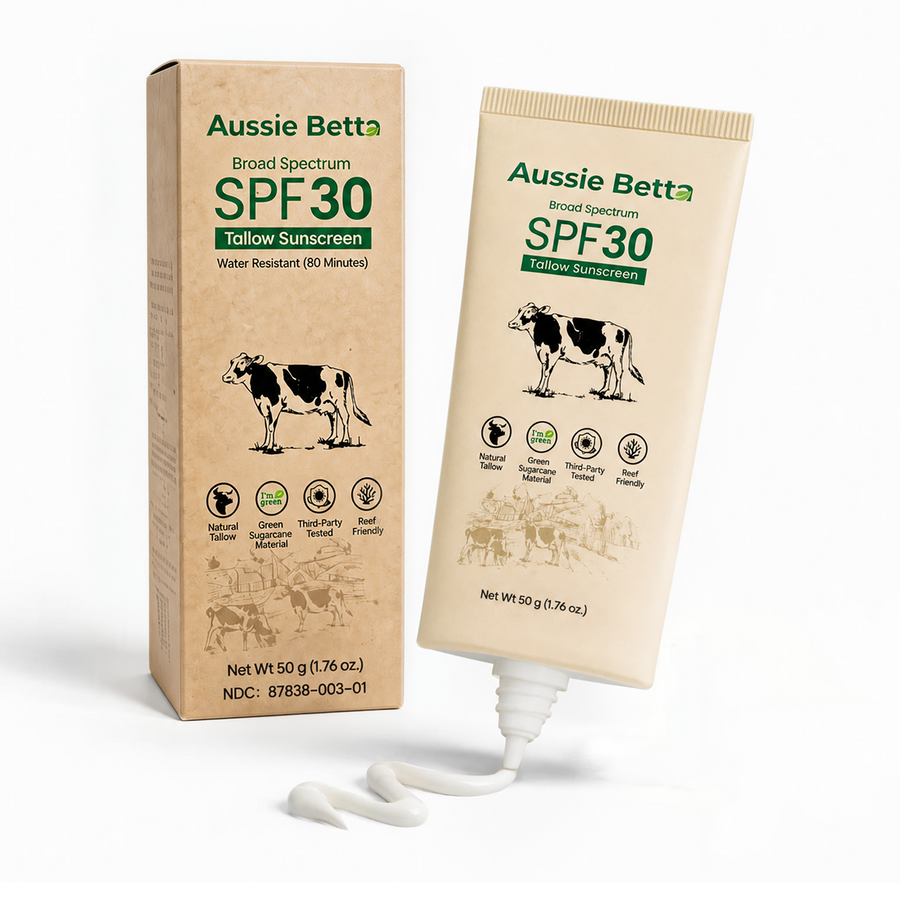
Everyday Face
SPF30 Mineral Tallow Sunscreen
- Mineral formula
- Everyday facial wear
- Lighter everyday role
$29.99
Shop SPF30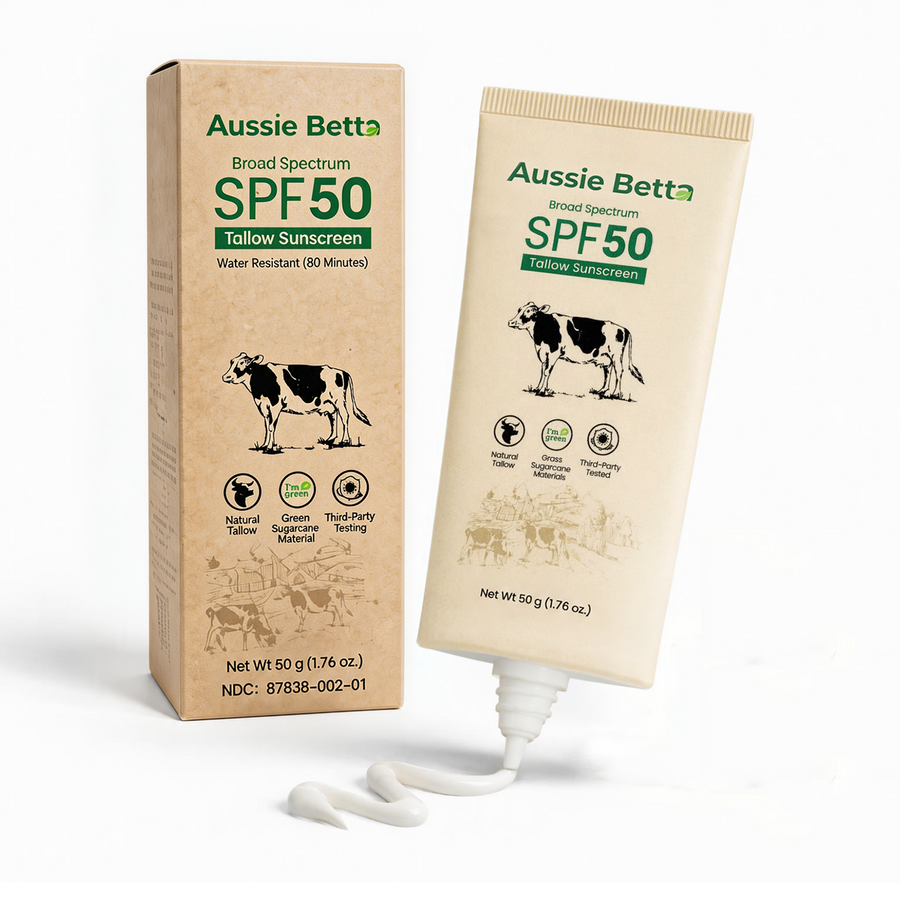
Longer Outdoor Days
SPF50 Hybrid Tallow Sunscreen
- Hybrid formula
- Face + body
- Higher-SPF outdoor role
$32.99
Shop SPF50Frequently Asked Questions
Who tested Aussie Betta sunscreens?
Aussie Betta SPF30 and SPF50 were independently tested by Intertek Testing Services Shenzhen Ltd. Guangzhou Branch.
Was the SPF tested on people?
Yes. Each sunscreen test involved 10 human participants: eight women and two men, aged 19 to 56.
What does 80-minute water resistance mean?
It means the SPF was evaluated after a defined water-resistance protocol totaling 80 minutes of water immersion, divided into four 20-minute periods with rest periods in between.
Does water resistant mean waterproof?
No. Water resistance refers to performance under a defined water-resistance test procedure. Swimming, sweating, towelling and extended outdoor exposure can still make reapplication necessary.
What SPF result did the SPF50 sunscreen receive?
Intertek reported a Very Water Resistant (80 minutes) SPF value of 55. The average measured SPF across the 10 participants was 55.8.
What SPF result did the SPF30 sunscreen receive after water immersion?
Intertek reported a Very Water Resistant (80 minutes) SPF value of 27. The average measured post-immersion SPF across the 10 participants was 27.8.